Sustainable Printing 2025
The Progress, Pitfalls, and Honest Realities
Sustainability in print has never been more urgent, or more complex. I see it every day: UK businesses raising the bar, driven by their client and customer, legislative, and ethical demands. But after years of sustainable pledges, where are we now? What's changing, and what does it really take to achieve "green printing practices" in 2025?
Why Sustainable Print Materials Matter More Than Ever
Today, sustainability in print is much more than "doing good". For clients, especially those working with larger brands or public tenders, it's increasingly a commercial necessity. Supplier audits tied to ESG policies mean procurement teams and corporate buyers often demand proof: FSC certified paper, B Corp status, waste-reduction partnerships, or solid traceability. Scope 3 emissions targets are putting the print supply chain in sharp focus for every UK business serious about net zero.
When we meet with new clients, the conversation quickly moves from "Do you offer recycled options?" to
| "How will this choice impact our brand reputation, compliance and long-term cost?".
Even where formal audits are rare, buyers want reassurance that their print partners can back up green claims with evidence, and that their choices align with both market expectations and future business risks.
What Sustainable Print Really Means in 2025
- Certified Papers (FSC, PEFC, Recycled) ~ Offering traceability from forest to finish.
- Plastic-Free Packaging ~ And compostable mailers. Critical for direct-to-consumer brands and B2B print kits.
- Low-VOC, Vegetable, and Water-Based Inks ~ Reducing air and water pollution vs. traditional solvent processes.
- Print-on-Demand Work ~ Smarter production to minimise spoilage, overruns, setup waste and cut waste/reduce stock holding, powered by digital automation.
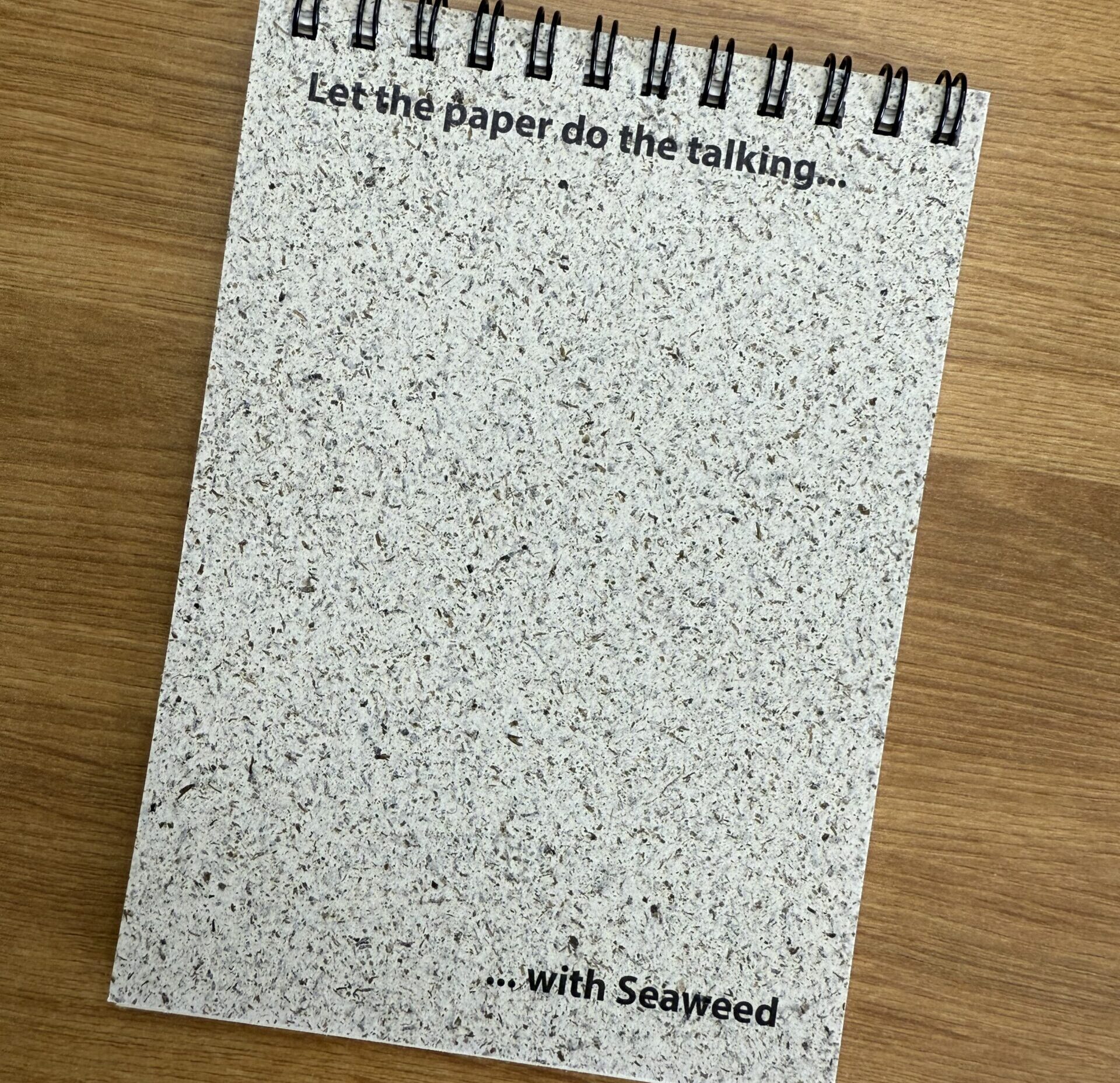
Innovation in Action ~ Closing the Loop
Circular models are emerging. Some printers now collect waste print trimmings and return them to the paper cycle. Forward-looking brands are experimenting with mono-material solutions so that every element (envelope, insert, label) can be recycled together. The goal? Nothing to landfill.

The Hard Truths ~ When "Green" Gets Complicated
One of our industry's current crises: In the UK, FSC-stamped uncoated paper is limited right now. Why? With many post-consumer recycled stocks, it's currently hard to trace every fibre back to its original forest (an FSC requirement). Many UK and European providers have had to 'pull' uncoated recycled papers due to not having the FSC accreditation. The reality:
- Buyers must sometimes choose between uncertified recycled stock or certified virgin fibre.
- Transparency with clients is key. There isn't always a perfect answer, and the "greenest" name isn't always the greenest option.
Sometimes the process pollutes more than the product. The extra processing required to achieve certain recycled or certified papers can, in some cases, actually push up net environmental impact. For example, recycled papers may undergo more intensive bleaching or longer, higher-energy processing compared to modern fibres sourced from responsibly managed forests.
Other challenging areas:
- Cost ~ High-quality sustainable materials can cost 10-30% more than standard stock. Hard to swallow for tight marketing budgets.
- Availability ~ Even in 2025, some specs (like truly plastic-free laminates or regionally sourced recycled board) aren't always available at short notice, especially for niche or high-volume jobs.
- Misconceptions ~ Not all "eco-friendly printing solutions" claims stack up. For instance, some "biodegradable" plastics need commercial composting to break down. Home compost just won't cut it. And recycled paper isn't automatically lower carbon if it's shipped further or processed inefficiently.
Mythbusting: Greenwashing & Real Credentials
| "It's not enough to flash an FSC or recycled logo…"
- Ask for documentation: Chain-of-custody certs, supplier declarations, energy data.
- Recognise "eco laminates" and compostable films may be wishful thinking outside specialist recycling streams.
- The lifecycle wins come from thoughtful design for waste minimisation, not just the latest badge.
The Way Forward (and My Advice)
No supplier can promise perfection, nor should they. The best outcomes come from shared, informed decision-making between client and print partner. My advice:
- Treat your printer as a consultant, not a catalogue.
- Ask as many questions as you need about sourcing, process, carbon, and supply chain reality.
- Understand that sometimes, the "best" solution is a compromise; clarity and transparency outweigh green posturing every time.
- Stay curious. Watch out for innovations, and don't be afraid to pilot new stocks or plant-based technologies when the project fits.
Where will we be in 2030? Imagine standardised eco-labels (like food), plant-based inks as the norm, net-zero print sites, and mainstream mono-material packaging. We're not there yet, but every project, and every client willing to pilot the next innovation, gets us closer. We all play a role in getting the industry there.
Conclusion: Progress, Slow and Steady
Sustainable print in 2025 is about progress, not perfection.
We're moving faster and further than most buyers realise, but with honest barriers and a need for continuous improvement. As new regulations and shifting supply chains reshape the landscape, openness and collaboration, not just chasing badges, will define the brands and printers who lead.